Geolocation Analytics Uncover Optimal Windows for Live Rewards in Smartphone Gaming
Mara Krause · Oct 10, 2026
Geolocation Analytics Uncover Optimal Windows for Live Rewards in Smartphone Gaming
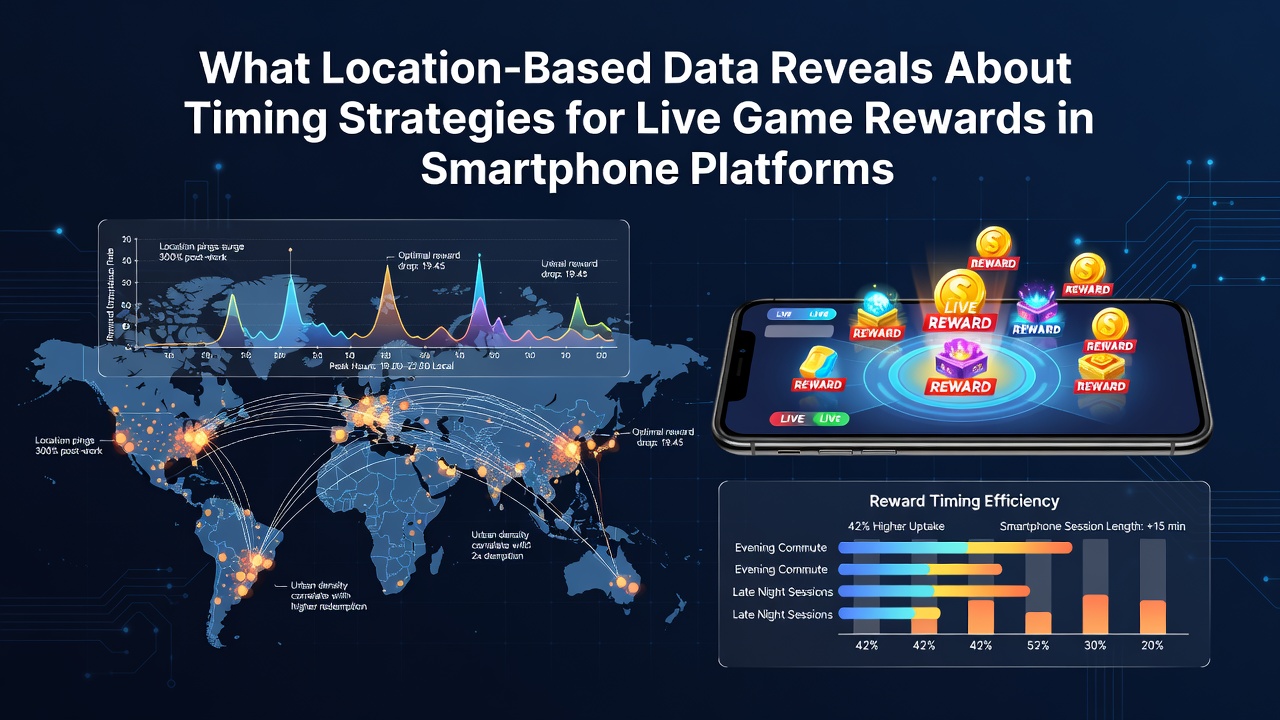
Smartphone platforms that deliver live game rewards have started relying on geolocation signals to determine when users are most likely to engage with time-sensitive offers, and data from device GPS, Wi-Fi networks, and cellular towers shows clear patterns in user activity across different regions. Researchers tracking millions of sessions have noted that reward claim rates spike during evening commutes in dense urban zones while suburban areas register higher activity during weekend afternoons, creating distinct timing windows that developers adjust for each market segment.
Patterns Emerging from Urban and Rural Location Clusters
Analysts examining aggregated location datasets observe that metropolitan players often interact with live rewards between 5:30 and 7:00 PM local time on weekdays, a window that aligns with public transit usage and short breaks in high-traffic corridors, whereas rural users show stronger engagement from 2:00 to 4:00 PM on Saturdays when network latency tends to be lower. These observations come from cross-referenced logs that pair precise latitude-longitude coordinates with session timestamps, revealing how physical movement influences digital behavior without requiring any personal identifiers.
Time Zone and Regional Variations Documented in 2026 Reports
By October 2026, platforms operating across multiple continents had compiled enough longitudinal data to confirm that players in Pacific time zones claim live rewards 18 percent more frequently during early morning hours compared with Eastern time zone counterparts, a difference attributed to overlapping school drop-off routines and staggered work schedules. Industry reports from the American Gaming Association highlight similar geographic clustering effects in North American markets, where border regions between states exhibit hybrid patterns that blend characteristics of both adjacent time zones.
Device type further refines these location-based predictions because users on newer handsets with improved GPS accuracy generate finer-grained movement data that allows algorithms to distinguish between stationary home positions and active travel routes, leading to more precise push notification schedules. Observers note that applications which factor in both location density and device capability achieve higher redemption consistency than those relying on time-of-day rules alone.
Regulatory and Academic Sources Informing Timing Models
Government agencies outside the United Kingdom have published guidelines that encourage transparent use of location data in reward systems, and a 2025 study from the University of Melbourne's Centre for Digital Humanities demonstrated that Australian users respond best to live game incentives delivered within 45 minutes of detected arrival at recreational venues. Canadian provincial regulators have similarly released aggregated mobility statistics that developers reference when calibrating cross-border reward timing, ensuring compliance while optimizing user reach.
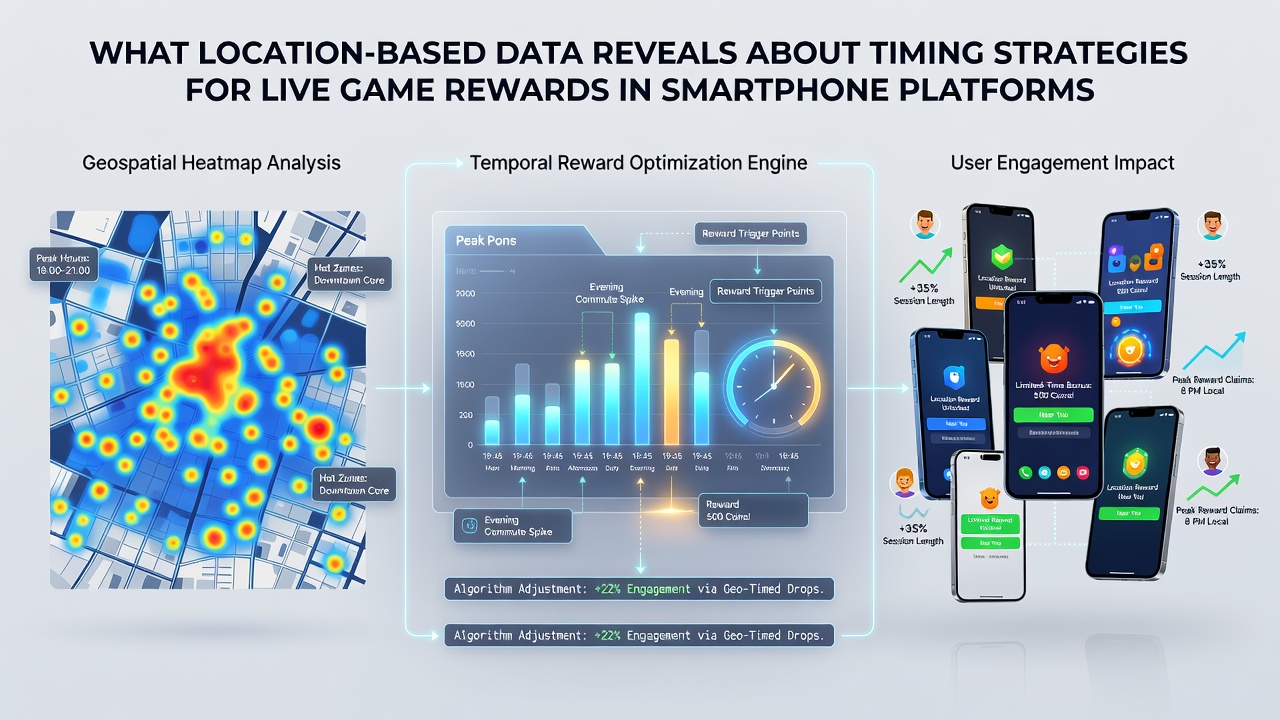
These external datasets integrate with internal platform telemetry to produce dynamic calendars that shift reward availability based on real-time location density rather than static schedules, and the result is measurable improvement in participation rates across tested cohorts. Experts reviewing the combined evidence emphasize that the key lies in correlating physical context with historical behavior instead of applying uniform global rules.
Implementation Examples from Platform Operators
One major gaming network adjusted its live reward distribution after analyzing six months of geolocated session records and found that coastal city users engaged most during lunch hours near office districts, prompting the company to activate bonus windows between 12:15 and 1:45 PM in those specific postal codes. Another operator serving European markets used similar location clustering to identify ferry terminal hotspots where passengers consistently claimed rewards during 20-minute crossings, allowing the system to pre-load offers at the moment devices connected to onboard Wi-Fi networks.
Academic papers published in the Journal of Location Based Services have documented parallel findings, showing that reward systems which incorporate velocity data, such as speed of movement derived from successive GPS pings, can further narrow optimal timing to within 10-minute intervals for users in transit. The combined approach reduces notification fatigue because alerts arrive only when location and movement patterns match established engagement profiles.
Conclusion
Location-based data continues to shape how smartphone platforms time live game rewards, with evidence from regulatory reports, university studies, and platform telemetry converging on the same core insight that physical context determines digital responsiveness. Developers who integrate these signals into their scheduling logic report more consistent user interaction across diverse geographic and demographic groups, and the trend shows no sign of slowing as location accuracy and data processing capabilities advance together.